
Can I get 4K sports channels?
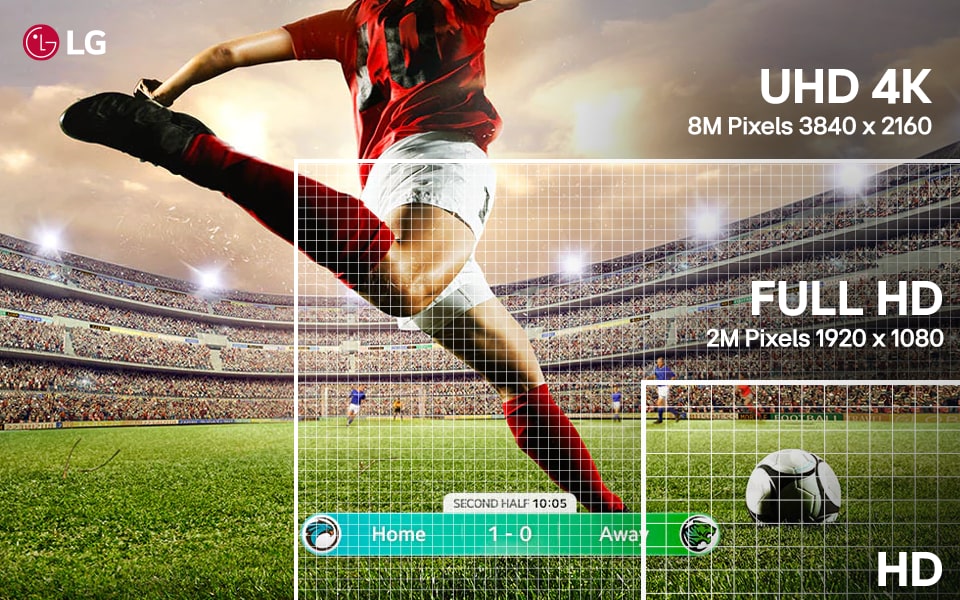
Table of Contents
Introduction: The Promise of the Perfect Seat
Imagine settling into your couch on a crisp Sunday afternoon. The pre-game show is over, the teams are lined up, and you’re ready for kickoff. You click over to the channel, and the picture loads. It’s not just clear; it’s breathtaking. You can see the individual blades of grass on the field, the texture of the players’ jerseys, the beads of sweat on their brows, and the intricate details of the stadium crowd. This is the promise of 4K sports broadcasting: a front-row, immersive experience from the comfort of your living room.
But for many sports fans, this dream feels just out of reach. You’ve bought the 4K Ultra HD television, you’re paying for a premium TV package, yet you find yourself asking: “Can I actually get 4K sports channels, or is it all just marketing hype?”
The answer is a nuanced one. Yes, you can access 4K sports content, but it’s not as simple as flipping to a dedicated 24/7 channel like ESPN or Fox Sports 1 and finding everything in 4K. The landscape is fragmented, event-driven, and often shrouded in technical jargon that can be confusing.
This guide is your definitive resource. We will demystify the world of 4K sports, separating the reality from the marketing spin. We’ll explore the major providers, explain the critical difference between “native” and “upscaled” 4K, and give you a realistic look at what you can expect to watch—and how to watch it—in stunning Ultra HD in 2024.
The Unvarnished Truth: “4K” Isn’t Always Real 4K .Can I get 4K sports channels?
Before we get to the “how,” it’s essential to understand the “what.” This is the single most important concept for any sports fan navigating the 4K landscape.
Native 4K vs. Upscaled 4K: The Critical Difference
When a provider says they offer a “4K broadcast,” they are often being technically correct but potentially misleading. There are two primary ways content ends up in a 4K resolution:
Native 4K (True 4K): This is the gold standard. The entire production chain—from the cameras on the field to the broadcast truck to the satellite or stream—is captured and transmitted at a resolution of 3840 x 2160 pixels. This delivers a genuine, four-times-the-detail improvement over Full HD (1080p). The color is richer (thanks to Wide Color Gamut – WCG), and the contrast is more dramatic (often with High Dynamic Range – HDR). True native 4K broadcasts are still relatively rare and are typically reserved for the biggest events of the year.
- Can I get 4K sports channels?
Upscaled 4K (or “Faux-K”): This is far more common. The broadcaster captures the event in a lower resolution, most commonly 1080p (Full HD) or 720p, and then uses software to “upscale” or stretch the image to fit a 4K container. While modern upscaling technology, especially in high-end smart TVs, is very good, it is not the same as native 4K. It can make the picture look slightly cleaner and sharper than a standard HD broadcast, but it cannot create detail that was never there in the first place. Think of it like blowing up a small, high-quality photograph; it will look okay, but it will never be as crisp as a photo taken with a high-resolution camera.
Why does this matter? Many providers are happy to label an upscaled broadcast as “4K” without clarifying its origins. As an informed consumer, you should manage your expectations accordingly.
Can I get 4K sports channels?
The Broadcast Bottleneck: Why Aren’t All Games in 4K?
The transition to 4K has been much slower than the move from standard definition to HD. There are significant, costly reasons for this:
Production Costs: 4K production requires an entirely new fleet of expensive cameras, lenses, production trucks, and storage systems. The data throughput for 4K HDR video is massive, requiring immense bandwidth and computing power.
Bandwidth Constraints: For satellite and cable providers, broadcasting a single 4K channel consumes the same amount of bandwidth as multiple HD channels. For streaming services, 4K requires a stable internet connection of at least 20-25 Mbps per stream, which can be a challenge for households with multiple users.
- Can I get 4K sports channels?
Lack of Industry-Wide Standards: While this is improving, the rollout has been piecemeal. Some networks, like NBC and Fox, have been more aggressive with their 4K productions (primarily for Premier League and select NFL games), while others have been slower to adapt.
The Providers: Your Gateway to 4K Sports in 2024
Can I get 4K sports channels?
Now, let’s get to the practical part. Where can you actually find this content? Here’s a detailed breakdown of the major players.
1. DIRECTV: The Traditional Powerhouse
DIRECTV has been the leader in 4K sports for years, offering the most consistent and dedicated platform.
How it Works: They have specific channel numbers (typically 104-106) dedicated to 4K programming. You can find a schedule of upcoming 4K sports events right in their guide.
Content: They have partnerships with Fox and NBC to broadcast a significant number of events in native 4K HDR. This includes MLB, NHL, College Football, NASCAR, and Golf. Their coverage of the Premier League is particularly robust.
The Catch: You need a specific Genie HD DVR receiver and a 4K-compatible television. For new customers, the 4K service is often included, but it’s best to confirm.
Best For: The die-hard sports fan who wants the most reliable and scheduled 4K sports experience and doesn’t mind a traditional satellite subscription.
2. YouTube TV: The Modern Streamer’s Choice
YouTube TV has positioned itself as a strong contender for the cord-cutting sports fan.
How it Works: 4K is not part of the base plan. You must subscribe to the “4K Plus” add-on.
Content: YouTube TV’s 4K offering is more event-based. They have carried select live sports from partners like Fox and NBC, including NFL playoffs, the World Cup, and Premier League matches. The add-on also includes unlimited simultaneous streams at home and the ability to download recordings for offline viewing.
The Catch: The add-on costs an extra $9.99/month (on top of the base plan), and the 4K sports schedule is less predictable than DIRECTV’s. You must check their live guide for “4K” tags on upcoming events.
Best For: The cord-cutter who is already invested in the YouTube TV ecosystem and wants the flexibility of a streaming service with the potential for 4K sports.
FuboTV: The Sports-First Streamer
As a service built from the ground up for sports fans, Fubo has made 4K a part of its premium offering.
How it Works: Access to 4K events is included in their top-tier Elite plan or available as a separate 4K Plus add-on for lower-tier plans.
Content: Similar to YouTube TV, Fubo’s 4K broadcasts are event-specific. They have featured events from Fox and other partners, including soccer, football, and more. Their interface will highlight which live events are available to watch in 4K.
The Catch: The Elite plan is one of the more expensive streaming options on the market. The value of the 4K offering depends entirely on how many of the events you watch are actually broadcast in 4K.
Best For: The sports-first streamer who is willing to pay a premium for a service dedicated to their passion and wants 4K when it’s available.
4. The “Secret” Weapon: Network Apps (Fox Sports, NBC Sports, ESPN)
Can I get 4K sports channels?
This is a pro-tip that many fans overlook. Sometimes, the best way to watch a game in the highest possible quality isn’t through your main TV provider at all.
How it Works: Download the official app of the network broadcasting the game (e.g., the Fox Sports app, NBC Sports app, or ESPN app). Open the app, find the live stream of the game, and log in with your TV provider credentials (your DIRECTV, YouTube TV, etc., username and password).
Why It’s Better: These apps often have a more direct, higher-bitrate stream than what is piped through a satellite or cable box. The stream may be in 1080p, but the quality can be superior to an upscaled 4K feed from your provider. In some cases, they may even offer a true 4K HDR stream that isn’t available on the linear channel. This is especially true for ESPN, which has experimented with 4K exclusively through its app.
- Can I get 4K sports channels?
A Realistic Sports Fan’s 4K Calendar
So, what can you actually expect to watch in 4K throughout the year? Here’s a general guide:
Football (NFL): Select Sunday and Thursday night games, and crucially, the Super Bowl are often produced in 4K by Fox and NBC. Don’t expect every Sunday game in 4K.
Soccer (Premier League): This is the leader in consistent 4K broadcasting. NBC Sports offers multiple matches in 4K HDR almost every weekend during the season.
Basketball (NBA) & Hockey (NHL): Coverage is sparse. You might find the occasional marquee game or the All-Star game, but regular-season 4K broadcasts are very rare.
Baseball (MLB): Fox carries the “Saturday Game of the Week” and playoff games in 4K, including the World Series.
Golf: The Masters, provided by CBS and ESPN through their apps, is a stunning showcase for 4K HDR. Other major tournaments on Fox and NBC also get the 4K treatment.
- Can I get 4K sports channels
Grand Slam Tennis: Events like the US Open and Wimbledon have been pioneers in 4K and HDR broadcasting.
Actionable Steps to Get Your 4K Sports Fix
Ready to take the plunge? Follow this checklist:
Audit Your Equipment: You need a 4K UHD television. Ensure you have high-speed HDMI cables and a reliable internet connection (25+ Mbps download).
Choose Your Provider: Based on the sports you watch most, decide between DIRECTV (most comprehensive), YouTube TV (best for cord-cutters), or Fubo (sports-centric).
- Can I get 4K sports channels?
Verify the Fine Print: Before signing up, check the provider’s website for their current 4K sports schedule. Don’t assume your favorite team’s games will be broadcast in 4K.
Use the Apps: Always have the network apps (Fox, NBC, ESPN) installed and ready. Before a big game, check both your TV provider’s channel and the network’s app to see which is providing the best quality feed.
- Can I get 4K sports channels?
Manage Your Expectations: Understand that you are buying into an event-based feature, not a 24/7 channel. The true magic of 4K is currently reserved for the biggest moments in sports.
Conclusion: The Future is Bright, But the Present is Selective
Can I get 4K sports channels?
The journey to ubiquitous 4K sports has been slower than many fans had hoped. While the technology is here, the economic and logistical realities of the broadcasting industry have created a fragmented, event-driven landscape.
So, can you get 4K sports channels? The definitive answer is yes, but with caveats. You can get stunning, native 4K broadcasts of major events like the Super Bowl, the World Cup, the Premier League, and the World Series. For everyday games, the offering is thinner, and you must be savvy about your provider and your viewing methods.
The trajectory, however, is clear. As production costs fall and bandwidth becomes cheaper, more and more events will be captured in true 4K HDR. For now, the informed fan—the one who understands the difference between native and upscaled, who knows to check the network apps, and who chooses their provider wisely—is the one who gets to enjoy the best seat in the house, without ever leaving home